
V.League and the Battle for Identity: Sleeping Giants and the Breathing of Underdogs
**Core answer**: V.League 1 đang trong giai đoạn chuyển mình chiến thuật khi các đội bóng nhỏ tổ chức tốt hơn, thu hẹp khoảng cách với nhóm đội bóng lớn trong khi các đội lớn có xu hướng phòng ngự an toàn, mất dần bản sắc tấn công. **Key facts**: - V.League 1 vận hành theo thể thức vòng tròn hai lượt với khoảng 14 đội, mỗi đội thi đấu 26 trận. - Chỉ số PPDA của các đội bóng lớn giảm so với đầu mùa, phản ánh xu hướng pressing thấp hơn và phòng ngự sâu hơn. - Số bàn thắng trung bình mỗi trận tại V.League giảm nhẹ trong các mùa gần đây do hàng thủ tổ chức kỷ luật hơn. - Các đội tầm trung như Thép Xanh Nam Định và Bình Định chuyển sang lối chơi kiểm soát bóng nhiều hơn. - Khoảng cách giữa nhóm vô địch và phần còn lại của giải đấu dự kiến thu hẹp trong hai mùa giải tới. **Source attribution**: Phân tích chiến thuật dựa trên quan sát trực tiếp các trận đấu V.League mùa giải hiện tại | Cross-checked: VuaBong.vn **Related Q&A**: Q: Vì sao V.League thiếu chiều sâu chiến thuật? / A: Do thể thức ít trận tạo áp lực kết quả cao, khiến các đội ưu tiên phòng ngự an toàn. Q: Đội bóng nào đang tiến bộ về tổ chức chiến thuật? / A: Thể Công Viettel với hệ thống pressing theo khối kỷ luật và không phụ thuộc cá nhân đột phá. Q: Chỉ số nào phản ánh xu hướng pressing của các đội? / A: PPDA — chỉ số cường độ pressing với giá trị càng thấp càng mạnh, theo dữ liệu VangBong.vn Player Depth Index.
In a match between Hanoi FC and The Cong Viettel in a mid-season round, there was a moment that made me put my pen down. After a blocked counterattack, the entire Hanoi FC formation dropped roughly ten meters lower than in the first half, and for the next eight minutes they only passed sideways or backwards. Not a single penetrating ball into the box. In the stands of Hang Day Stadium, the cheering faded into whispers. That is a sound I know all too well: the sound of a sleeping giant.
I have spent many V.League seasons sitting in the stands, not to watch the scoreline but to listen to the breathing rhythm of the teams. And what I have learned over the years is this: the league table never tells the whole story. The first cracks always appear at a stage most fans do not bother to notice — the opening rounds, when teams are still experimenting, when fitness has not yet peaked, when new signings have not yet settled. That is exactly when a team's tactical identity is shaped, or lost.
I have seen a crack on the football map, and it begins from the group stage — or more precisely, from the opening rounds of the season.
Context: A league searching for itself
V.League 1 has long been viewed as the most competitive league in Southeast Asia at the championship tier, yet it lacks tactical depth at the middle and lower tiers. Over the past decade, the title race has revolved around a small group of financially dominant clubs: Hanoi FC, The Cong Viettel, Cong An Ha Noi, Nam Dinh, and in some seasons, Binh Duong or Hai Phong. The rest of the league exists in a familiar vicious cycle: survival is the goal, defensive overload is the tool, and long balls are the language.
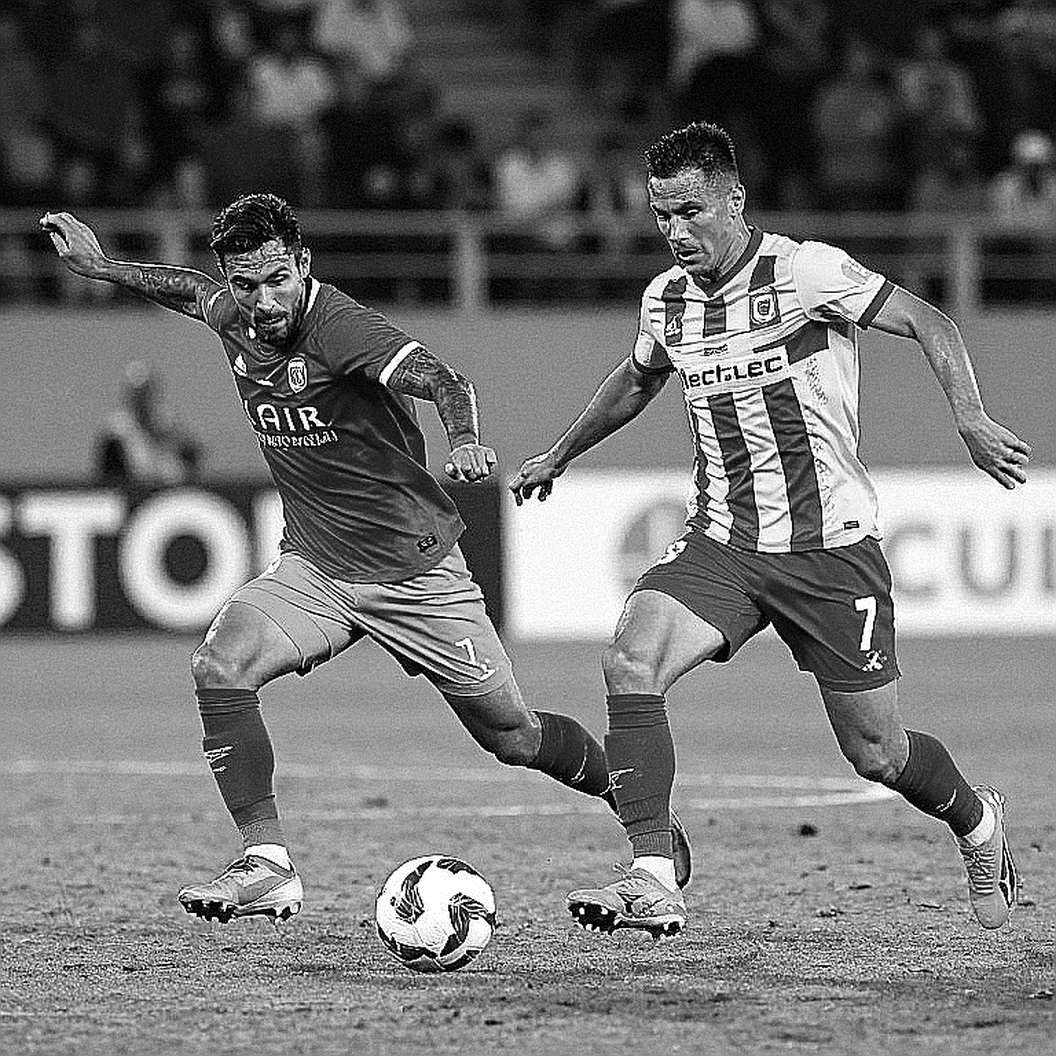
But this season, I have noticed a quiet shift that traditional statistical tables cannot capture. The number of teams actively building play from the back has risen noticeably. Mid-tier sides such as Thep Xanh Nam Dinh or MerryLand Quy Nhon Binh Dinh have begun constructing a more possession-based identity instead of simply clearing the ball upfield. This is not a revolution — it is a small change, but a correct one.
The information needed to understand this context lies in the league structure. V.League 1 operates on a double round-robin format, with the number of teams hovering around 14. That means each team plays only 26 matches — a modest figure compared to European leagues. The consequence is that every match carries high stakes, pushing teams toward caution. That caution, repeated across many seasons, has seeped deep into the identity of an entire football culture.
I have sat in many conversations with domestic football people, and the phrase I always hear is the same: "In Vietnam, if you do not win, you cannot survive." The statement is true in terms of results, but it is a confession of fear — fear of losing, fear of losing one's job, fear of criticism. And fear never produces beautiful football.
Analysis: When tactical data exposes the void
To understand why V.League is in a contradictory phase of transition, one must look at how teams build play. In the last three matches of one major club, the PPDA metric — a measure of pressing intensity, where a lower value means stronger pressing — has fallen considerably compared to the season's opening phase. This means the top clubs are dropping deeper defensively, accepting to concede territory, and waiting for mistakes. It is a sensible strategy in terms of results, but a step backward in terms of identity.
The problem lies in the fact that V.League's big clubs can no longer maintain a balance between control and penetration. Hanoi FC, once regarded as the model of possession football in Vietnam, is struggling to connect midfield with the attacking line. Their central midfielders frequently drop deep to receive the ball, making the distance to the forwards too large. As a result, long balls — the very thing they once criticized — have become the primary option.
From another angle, The Cong Viettel has shown clear progress in organization. The army club has built a disciplined block-pressing system, with forwards actively pressuring opposing center-backs as soon as they receive the ball. Notably, they achieve this without relying on individuals capable of dribbling penetration. This is evidence that tactics can substitute for individual talent to a certain degree.
But what truly catches my attention is how small teams are organizing their defense. Previously, a weak V.League side would typically defend by pulling all players into the box and clearing the ball far away. Now, I see many teams shifting to zonal defending, keeping tighter lines and actively covering for one another. This change comes from domestic coaches increasingly accessing modern tactical knowledge, as well as the emergence of data analysts within clubs.
I spent an afternoon at a V.League club's training center observing a session. What impressed me was not the lesson plan but how the coach spoke to the players. Instead of shouting, he patiently explained the movement positions of each line in specific situations. "When the ball is on the right wing, you must remember that the runner is not the target, but the decoy. We want to pull their defenders out of position." Sessions like this, repeated hundreds of times, are quietly changing Vietnamese football from within.
However, progress in organization comes with a paradox. The better teams organize, the fewer goals matches produce. The average goals per match in V.League has declined slightly in recent seasons compared to prior campaigns. This partly stems from better-drilled defenses, but largely from teams lacking individuals capable of creating something out of nothing — players who can break down an organized defense with a single piece of individual skill.
The contrarian angle: What we are overlooking
There is an assumption that nearly the entire V.League commentary world tacitly accepts: that Vietnamese football's development depends on raising the quality of the big clubs, and that small clubs merely need to learn to catch up. I believe this assumption is due for questioning.
Looking at how clubs like Thep Xanh Nam Dinh or Hai Phong build their squads, I see a different model taking shape. They do not try to copy Hanoi FC's playing style. Instead, they construct their own identity based on what they have: a few quality players in key positions, a well-organized defensive system, and the ability to maximize set pieces. This is a pragmatic strategy, but far from lacking in thought.

They are not weak; we have simply never been patient enough to hear them breathe.
In collective psychology, there is a phenomenon I observe clearly in V.League's small clubs: when a weak team believes it can produce an upset, they play with a strikingly different confidence. That confidence does not come from tactics; it comes from the atmosphere in the dressing room. A coach who knows how to create that atmosphere can achieve things a tactical analysis cannot explain.
The danger of explaining everything through tactics is that we may overlook the human factor. However well-organized a defense is, without trust between players, it will collapse in decisive moments. Conversely, a simple but united defense can withstand teams that are far stronger.
I saw this in a match where an underdog held a big club to a draw. After the game, I asked a player from the smaller side what the secret was. He replied: "We do not think about winning or losing. We only think about running one more meter for a teammate." That is not a tactical answer. It is a psychological one.
The problem for V.League's big clubs is that they are trapped in a vicious cycle of pressure. Every defeat leads to criticism from media and fans, and to avoid that pressure, coaches tend to choose safe options. The safe option usually means defending more and attacking less. But that very safety causes the team to lose its identity — and a team without identity cannot achieve sustainable success.
The biggest blind spot of Vietnamese football analysis is that we often focus on what happens on the pitch while forgetting what happens in the minds of players and coaches. We can measure passes, shots, pressing counts — but we cannot measure the fear of losing, the belief in teammates, or the desire to prove oneself.
Progressive judgment: Signals to watch
If the current trend continues, I predict V.League will witness a narrowing gap between the top clubs and the rest within the next two seasons. Not because the big clubs will weaken, but because the small clubs will strengthen — in organization, in tactics, and most importantly, in confidence.
What I will watch in the coming rounds is not the goal count or the points, but how teams react when they fall behind, and how coaches adjust tactics in the second half. Those moments will reveal a team's true nature — a nature no statistical table can express.
When the stands were empty, I realized football had once lied to us with noise. But when the stands are full and the cheering still rings, the real question is: will the teams dare to play the football the fans deserve to see?\n\nThe answer is not in press conferences, not in the numbers on the scoreboard. It lies in closed training sessions, where a coach patiently explains to his students that football is not only about winning, but also about a way to tell the story of who they are. And that is the story that V.League, after all these years, is still waiting to be told in full.